

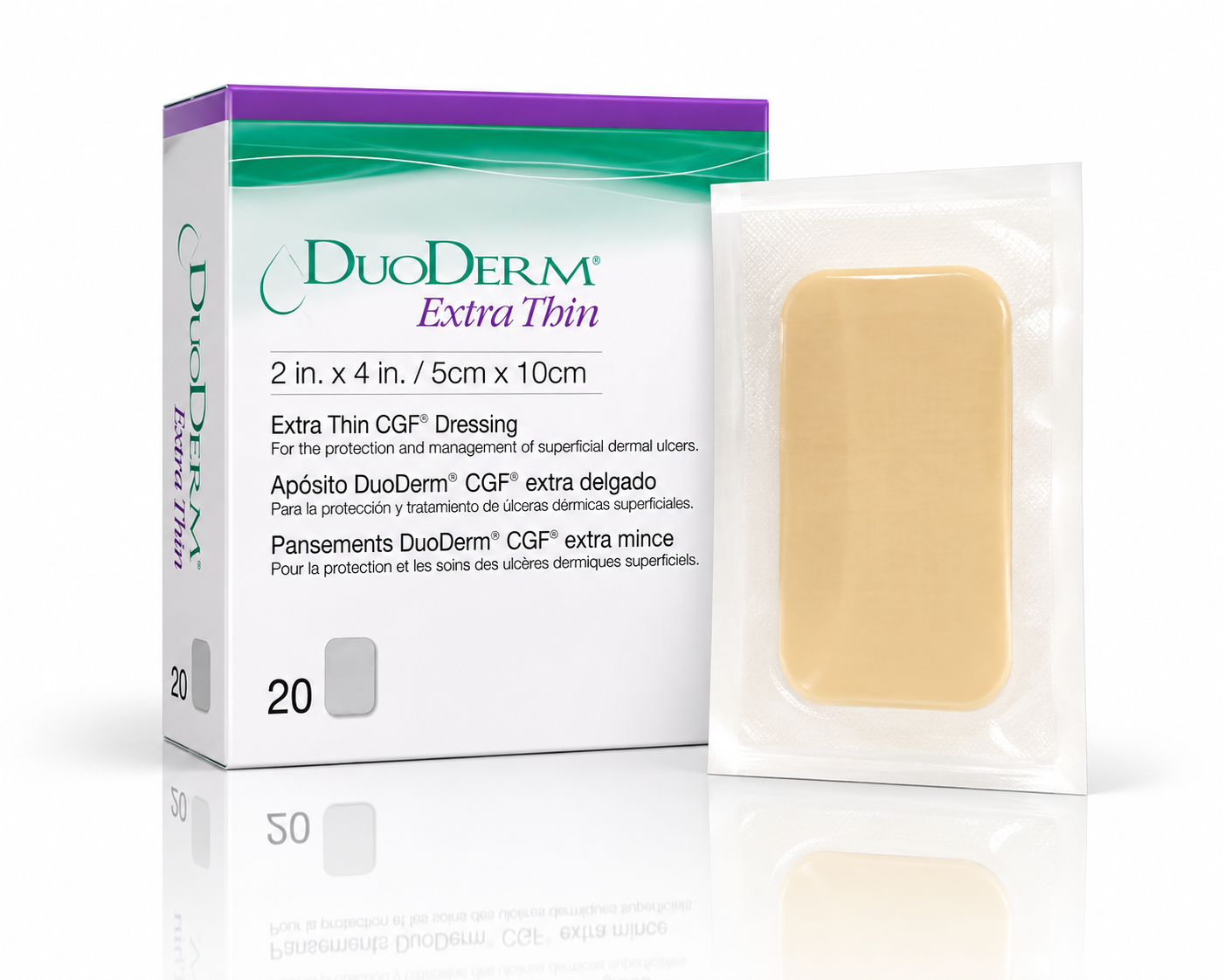
DUODERM EXTRA THIN DRESSING 5x10cm (187900)
Hydrocolloid wound dressing
Description & Characteristics
DuoDERM® EXTRA THIN®
Mechanical properties:
- Is a dressing with a gel-forming formula that is highly flexible
- Designed for use on dry or lightly exuding wounds
- Suitable for areas of skin prone to peeling or areas with folds that require good adhesion such as elbows, heels, etc.
- Interacts with wound moisture and forms a soft gel layer that helps remove the dressing without pain and without damaging newly formed tissues
- Helps isolate the wound from bacteria and external factors
Mechanical properties:
- DuoDERM Extra Thin interacts with wound moisture and forms a soft gel layer that helps remove the dressing without pain and without damaging newly formed tissues
- The gel layer gradually expands as the dressing absorbs exudate
- The adhesive capability of the hydrocolloid layer in DuoDERM® EXTRA THIN® changes over the duration of use.
- The adhesive capability of the hydrocolloid layer will change according to the duration of dressing application.
- After a short time of applying the dressing, the adhesion will increase as the dressing is warmed by body temperature and reaches maximum adhesion after a few hours.
- After that, moisture from the wound and sweat on the skin interacting with the hydrocolloid particles will gradually reduce the adhesion of the dressing. This process takes place after a few days, up to 7 days. Temperature and humidity factors also affect the adhesion of the dressing.
Indications
Under the supervision of a healthcare professional, DuoDERM® EXTRA THIN® can be used for
- Superficial wounds, ulcers, dry to lightly exuding
- Surgical incisions
- Protective cover dressing for primary dressings
Contraindications
DuoDERM® EXTRA THIN® should not be used for individuals who are sensitive to the components of the dressing
Observations & Warnings
When used for ulcers:
- Use must be under the supervision of a healthcare professional.
- DuoDERM® EXTRA THIN® helps manage the wound locally. In chronic wounds, other factors such as patient repositioning and nutritional support must be considered.
- Increase in wound size: deeper tissue damage may appear beneath superficial skin ulcers.
- When using occlusive dressings, especially when necrotic tissue is present, the wound may appear larger after the first few dressing changes due to the removal of this tissue.
- Wounds, especially large or necrotic ones, often have an unpleasant odor; however, this is not necessarily a sign of infection.
- The odor will disappear when the wound is cleaned.
- If clinical signs of infection such as unusual odor, change in exudate color, fever, or inflammation are present, a swab should be taken for identification. If infection is confirmed, an appropriate treatment regimen should be combined. Continue using DuoDERM under the supervision of a healthcare professional.
Instructions for use
Preparation and cleaning of the wound :
- DuoDERM® EXTRA THIN® is sterile and must be handled properly
- Select a dressing size such that the edge of the dressing covers the wound edge by at least 2cm
- Clean the wound
- Dry the skin around the wound
- Limit finger contact with the adhesive side of the dressing
- Apply gently, do not stretch the dressing
- Smooth over the entire dressing, especially the edges
- Press and hold gently with your hand for 60 seconds to ensure the best adhesion
- Use one hand to press down and the other hand to gently lift the corner of the dressing and pull it up gently
Note
The dressing can remain on the wound for up to 7 days. Change the dressing when the edges of the dressing peel off or there are signs of infection
Shelf life - Storage conditions
Shelf life : 60 months
Storage conditions : Store in a cool, dry place
Storage conditions : Store in a cool, dry place
Superior characteristics

- Waterproof dressing, convenient for patients to maintain daily activities and bathing without affecting the wound and gauze
- Long wear time (up to 7 days)
- Thin and flexible dressing, can be applied to many different positions, including areas with folds
- Gel-forming dressing, does not adhere to the wound, helping to remove the dressing without pain and without damaging newly formed tissues
Same product line
Related products
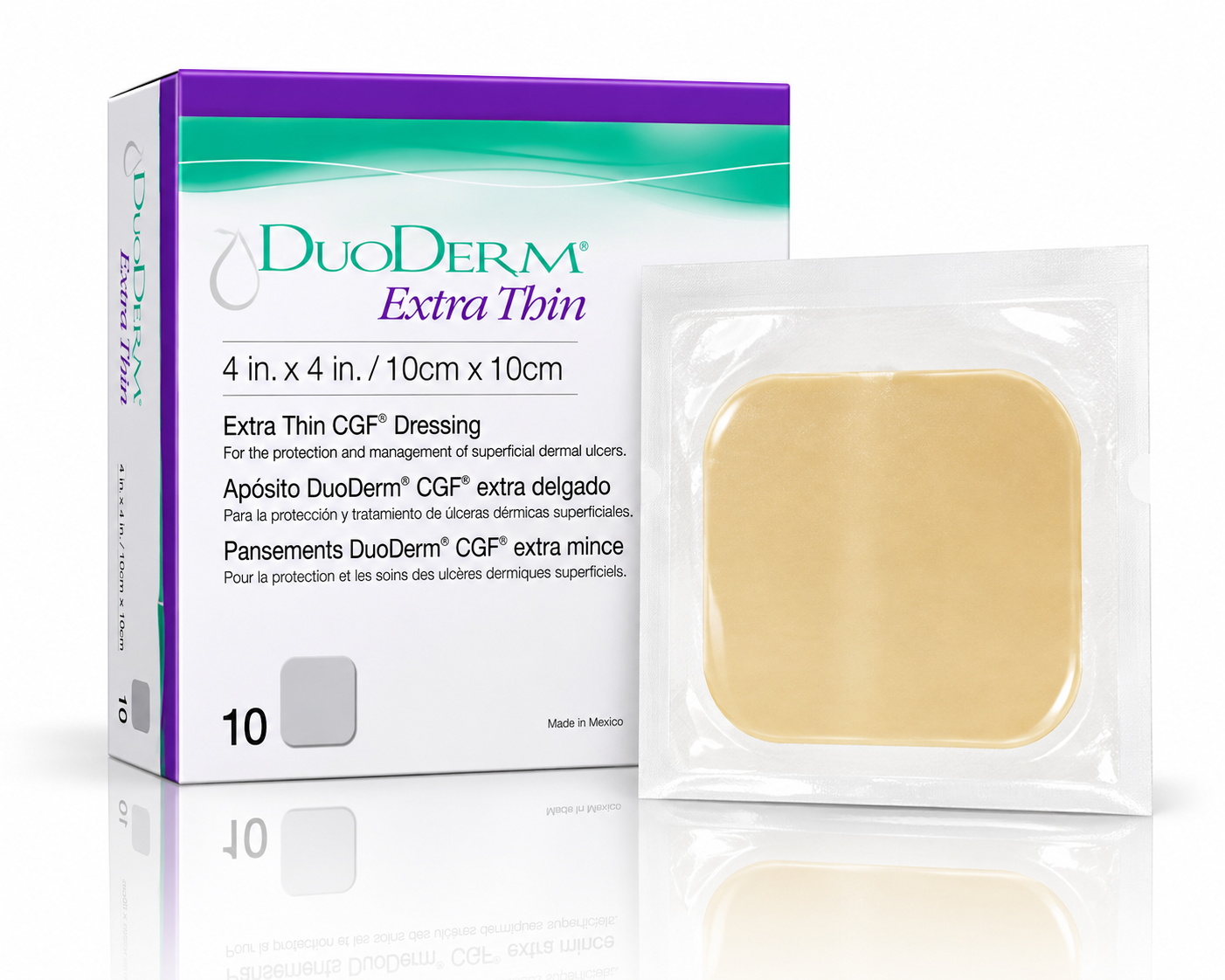
DUODERM EXTRA THIN DRESSING 10x10cm (187955)
Hydrocolloid wound dressing.
Box of 10 pieces, size 10 x 10 cm · USA Product
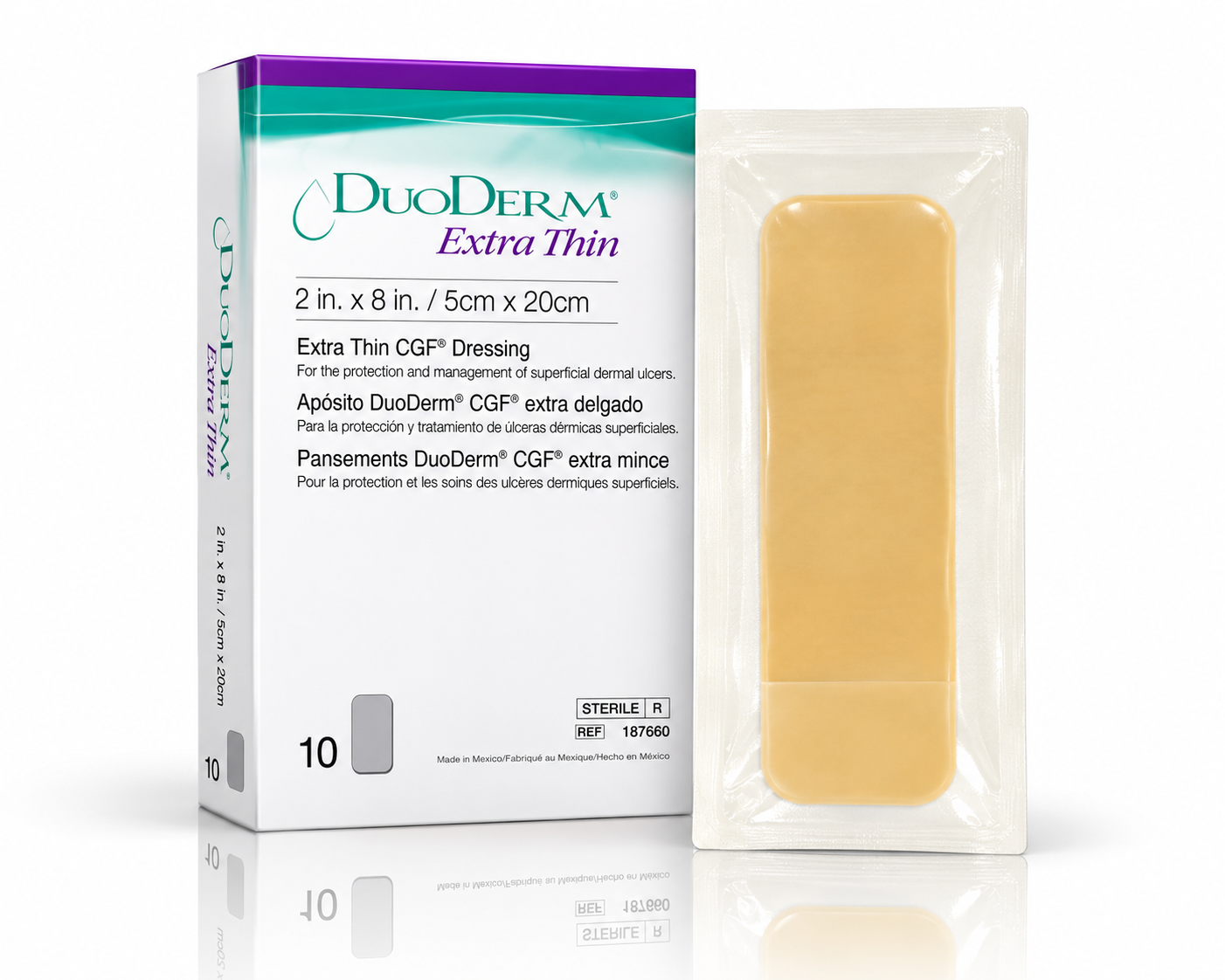
DUODERM EXTRA THIN DRESSING 5x20cm (187961)
Hydrocolloid wound dressing.
Box of 10 pieces, size 5 x 20 cm · USA Product
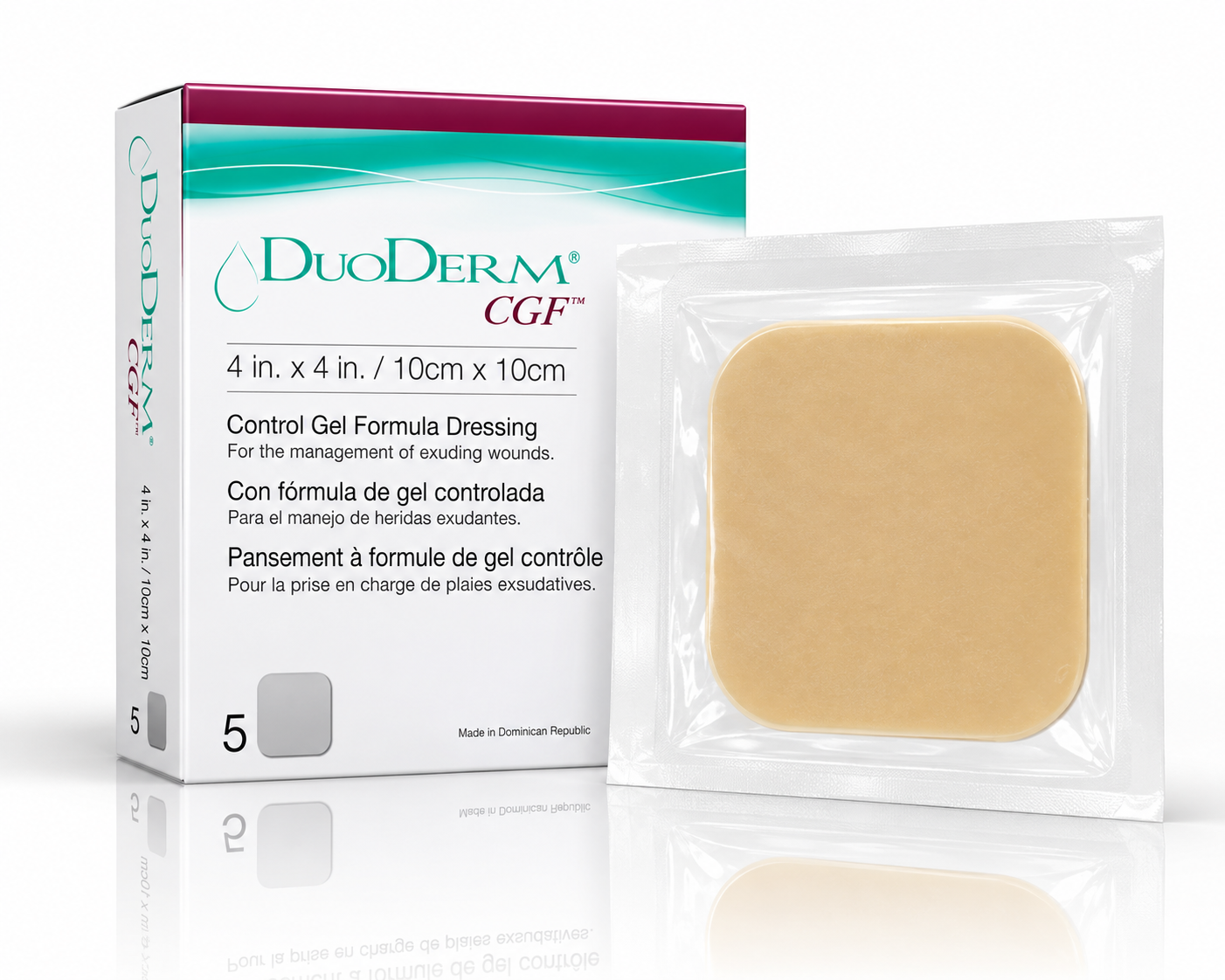
DUODERM CGF DRESSING 10x10cm (187660)
Hydrocolloid adhesive dressing combined with polyurethane.
Box of 5 pieces, size 10 x 10 cm · USA Product